
Sump Pump Installation: How It Works and What to Plan For in Star, ID
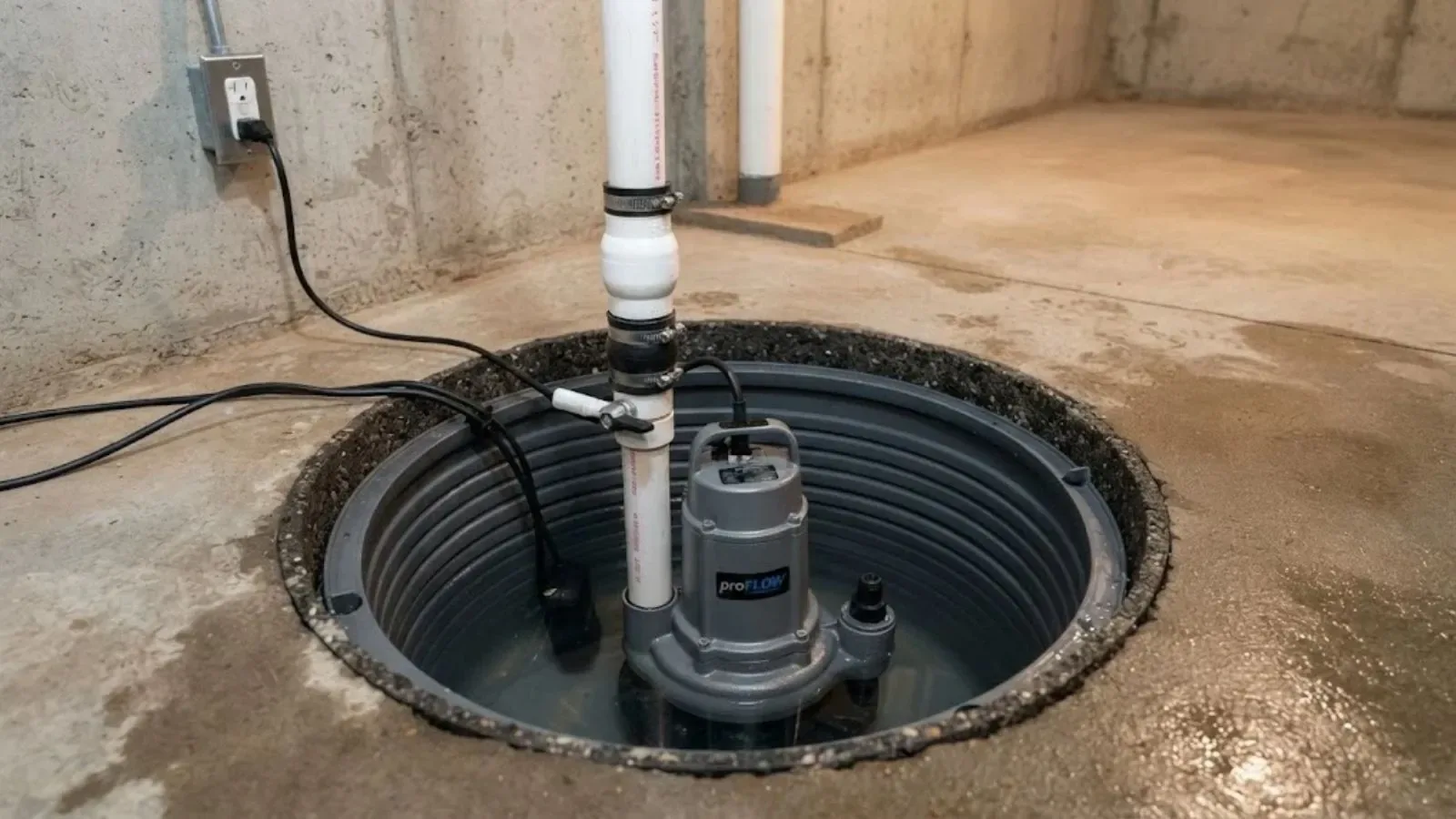
A sump pump installation has five parts: a pit cut into the lowest point of the floor, a basin, a pump with a check valve, a discharge pipe to the outdoors, and a safe power connection. A plumber can usually finish in one day when the floor is easy to open. A confident homeowner can do some of it, but the pit, the wiring, and the discharge routing are where mistakes get costly.
This guide walks through each part in the order the work happens, with notes on what to ask a plumber and what to check before you start. If you want a pro on site, our sump pump installation and repair team takes calls at (208) 679-8357.
- Open 24/7 for emergencies
- Licensed and insured
- Clear price before work starts
- Call to book, no forms
What a sump pump actually does
A sump pump is a small electric pump that sits in a basin below the floor. When water rises in the basin, a float switch turns the pump on and pushes the water out through a pipe. It keeps groundwater or runoff from building up under or beside the foundation. A hidden pipe leak can look like seepage, so leak detection is worth ruling out before you cut a floor.
| Type | How it works | Best fit |
|---|---|---|
| Submersible | Sits inside the basin under water, sealed motor | Most finished basements and crawlspaces, quieter than the alternatives |
| Pedestal | Motor mounted above the basin on a column | Narrow pits and spots where you want easy access to the motor |
| Battery backup | Second pump on its own battery and float | Homes where a storm can also knock out power |
Step by step: how the installation goes
Pick the low point and mark the pit
The pit goes where water collects or at the lowest corner, away from footings and clear of any pipes under the slab. A plumber checks the layout before a saw touches the floor.
Cut the slab and dig the hole
A concrete saw opens a square larger than the basin. The hole is dug to the basin depth plus a few inches of gravel under it. This is dusty, heavy work.
Set the basin and the pump
The basin sits level on gravel with its rim at or just below the floor. The pump goes inside on a flat base so the float can swing freely and not hang on the wall.
Fit the check valve and discharge pipe
A check valve on the outlet stops water from falling back into the pit after each cycle. The pipe runs up and out of the house to a spot that drains away from the foundation.
Power it and test it
The pump plugs into a GFCI outlet on its own circuit if possible. We fill the basin with a bucket of water and watch it switch on, empty, and shut off.
Where the water goes matters as much as the pump
The discharge line is the part homeowners get wrong most often. If it ends too close to the house, the water soaks back down and the pump cycles all day. If it runs on a slope that traps water in the pipe, freezing weather can block it. Point the outlet well away from the foundation and onto ground that slopes away.
Do not tie a sump discharge into a drain line that was built for household wastewater. Whether any sump discharge is allowed into the sewer is a question for the Star Sewer and Water District and your building department, not something to guess at.
Check before the pipe goes in
- The outlet ends where water will drain away, not toward the house or a neighbor's lot.
- A check valve sits on the line, with an access coupling so it can be replaced.
- The pipe is supported and sloped so it empties after each cycle.
- A small air relief hole is drilled in the pipe below the check valve if the pump needs one, per the pump maker's instructions.
- If any trench is needed outside, call 811 first. Idaho law asks for at least 2 business days notice, and the dig area gets marked in white paint.
Call (208) 679-8357. Our line is open 24/7 and same-day appointments are available when the schedule allows.
Permits and local rules in Star
The Idaho Division of Occupational and Professional Licenses says a permit is required whenever plumbing work is performed. Homeowners may buy a permit for plumbing on their own residence and its outbuildings, and inspections are requested by phone at 208-334-3950 or online. Star City Hall at 10769 W State Street, (208) 286-7247, lists plumbing permits on its city services page.
What that means for you: before you open a floor or tie a discharge line into anything, call and ask whether your pump work needs a permit. A permit you skipped can show up later when you sell, and an inspector can catch a bad connection before it floods the basement.
Source type: Idaho DOPL and City of Star website
We do not state local groundwater depth or soil type here because those vary by lot and we have not verified them for Star. A plumber on site will tell you what the pit shows. Homeowners in Middleton and Eagle should ask their own city building department, because permit handling can differ from one city to the next.
DIY or call a plumber
Replacing a failed pump in an existing basin is a fair weekend job for a handy homeowner. Cut power at the breaker, unplug the pump, loosen the union, lift it out, and set the new one the same way. Open the floor for a brand new pit, however, and the job gets bigger fast.
Call a plumber if you need to cut concrete, run a discharge line through a rim joist, add a battery backup, or sort out where the water really comes from.
What shapes the price of an installation
- Whether a basin already exists or the floor has to be cut and the pit dug.
- How far the discharge line runs and how many walls it passes through.
- Pump size and whether you add a backup pump or alarm.
We give a clear price before work starts. Ask any quote to list the basin, pump, check valve, discharge routing, and cleanup, so you can compare quotes line by line. For your actual number, call (208) 679-8357. Pump plumbing and check valves follow the 2015 Uniform Plumbing Code (UPC) that Idaho adopts as its State Plumbing Code.
Sump pump questions from Star homeowners
When the floor is easy to cut and the discharge route is clear, a plumber can often finish in a single day. A new pit in thick concrete, a long discharge run, or electrical work can add time. Ask for the plan before the saw comes out.
If the same storm that fills your pit can also knock out power, a backup pump gives you a second line of defense. It runs from its own battery and float switch. If your lower level is finished or holds stored items, it is worth talking through.
No, do not connect a sump line to a household drain or cleanout on your own. Sewer rules are set by the utility and the building department. Call the Star Sewer and Water District or your city before you decide.
Pour a bucket of water into the basin every few months and confirm the pump starts, empties it, and shuts off. Do it before the wet season too. Listen for grinding or a motor that runs and does not move water.
Not automatically. Early settlers farmed along the Boise River about a mile south of today's town, but whether your lot sees groundwater depends on the lot, the grading, and the foundation. We have not verified groundwater depth for Star, so look for the signs at your own house and have a plumber check them.
Ready to put a pump in the low spot?
Call (208) 679-8357 and describe where water collects. We will explain the work and the price before anything starts.
☎ Call (208) 679-8357