
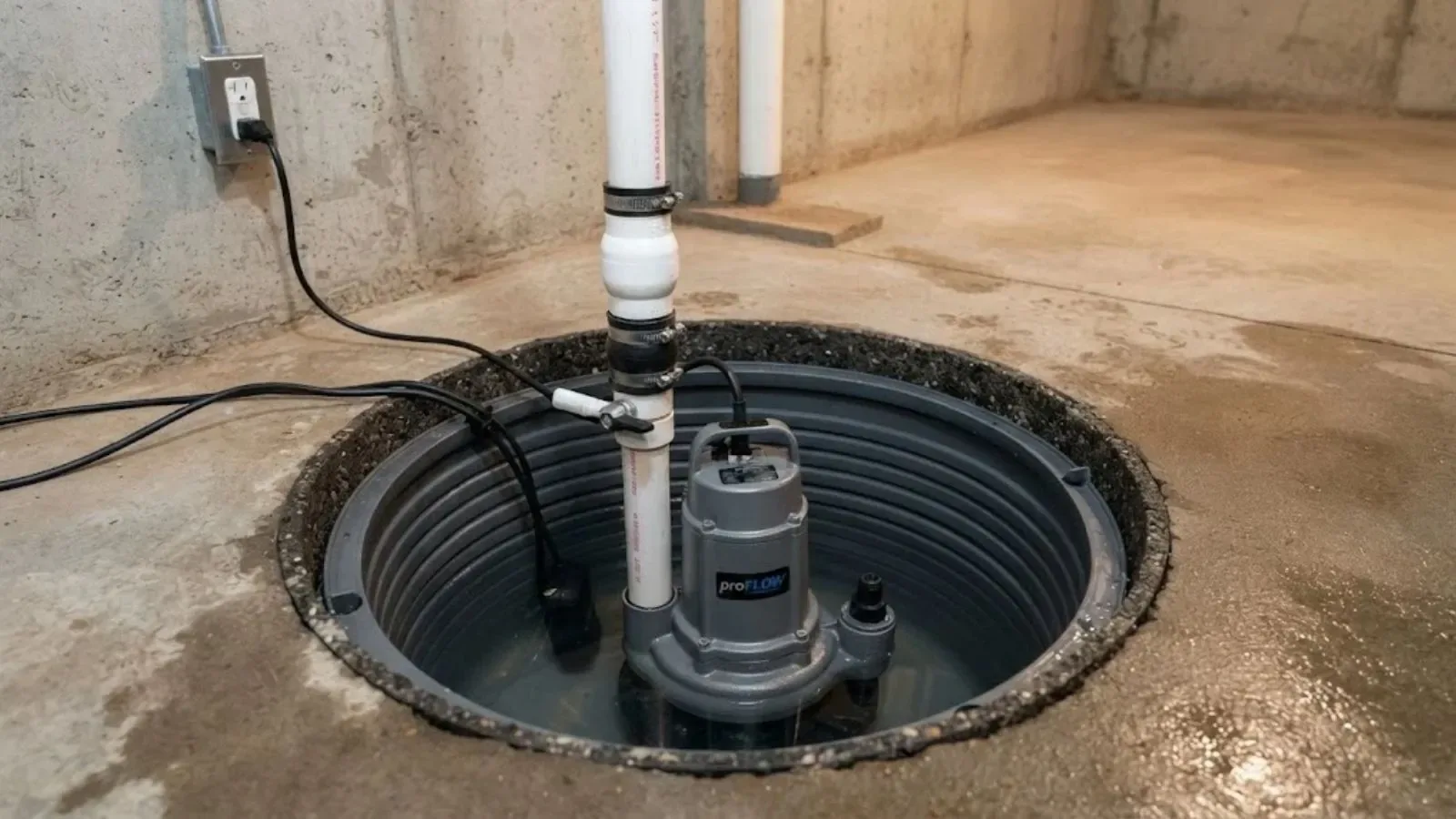
Emergency Sump Pump Repair in Star, ID
When a sump pit is filling and the pump will not start, the clock is running. Call (208) 679-8357. Our line is open 24/7, and a plumber will help you stay safe while we arrange sump pump repair in Star, ID.
Stay out of standing water until you know the power is off. If the pit is rising and the pump is silent, call right away and tell us what you see. Most pump swaps finish in one visit, and we explain the price before we start.
- 24/7 dispatch
- Same-day visits when available
- Honest about the cause
- Open 24/7 for emergencies
- Licensed and insured
- Clear price before work starts
- Call to book, no forms
Pump failure with water rising: safety and first moves
Water and electricity do not mix. A pump, its cord, and the outlet can all be live. If water is on the floor near the pit, do not wade in. Turn off the breaker for the pump circuit from a dry spot, and if you cannot reach the panel safely, call us before going near it.
Once the power is off, lift items off the floor. Do not reach into the pit with a bare hand.
While you wait for the plumber
- Keep out of standing water until the power is off at the breaker.
- Move boxes, rugs, and electronics above the waterline.
- Skip laundry and long showers.
- Check whether the pump is plugged in and the breaker or GFCI has tripped.
- Call us and describe what the pump is doing.
How to test a sump pump with a bucket of water
A bucket test takes five minutes and shows whether the float, motor, and discharge line work.
Confirm power
Make sure the pump is plugged into a working outlet and the GFCI is not tripped.
Pour slowly
Add a bucket or two of water into the pit until the float rises.
Watch the start
The pump should start by itself, empty the pit, and shut off cleanly.
Check the discharge
Listen for water moving through the line and look outside to see it leaving. A heavy knock when it stops means a bad check valve.
If nothing happens, or the pump runs but the water level does not drop, stop and call.
Float switches, stuck pumps, and check valves
| What you see | Likely cause | Usual fix |
|---|---|---|
| Pump will not start, pit rising | Stuck float, dead motor, or no power | Free or replace the float, or replace the pump |
| Pump runs nonstop | Float stuck up, failed check valve, or oversize flow | Clear the float, replace the check valve |
| Pump hums but no water moves | Jammed impeller or frozen discharge | Clean the impeller, clear the line |
| Loud banging after shutoff | Check valve slamming | Replace the check valve |
| Short cycling | Pit too small or float set poorly | Reset the float, review the pit |
The float switch is the usual weak spot. It can snag on the pit wall or on its own cord, and then the pump either never starts or never stops. The check valve on the discharge line stops water from falling back into the pit. When it fails, the pump cycles on the same water over and over.
Keep clear of the water and call. We take pump emergencies at night and on weekends in Star, Middleton, and Eagle.
Where the water goes: discharge lines and battery backup
The discharge line carries pumped water outside, away from the foundation. Ask your city or sewer provider about where a discharge may go, since not every drain accepts it. Do not tie a sump pump into the house sewer drain without checking first.
A battery backup pump sits beside the main pump or on a separate switch. If a storm cuts power, the backup keeps pumping for a limited time. It does not replace the main pump, and the battery needs periodic checks. Ask us about sizing and testing.
Sewage ejector pump versus sump pump
A sump pump moves groundwater or runoff from a pit. A sewage ejector moves wastewater from a basement bathroom, laundry, or bar sink up to the main drain, and it sits in a sealed basin. A failed ejector is a sanitation problem. If a toilet or a tub in a lower level backs up, stop using that bathroom and call.
We repair and replace both. Our drain cleaning team checks whether a backup is the pump or a blocked line, and a sewer line repair may be needed if the main is the issue.
Basement water and waterproofing questions
We have not verified Star's basement or groundwater conditions, so we will not guess. Ask whether your home has a pit. If you are unsure, call us before the first heavy storm or irrigation season, and we will look at what is there.
The first question for any water problem is the cause of water entry: a grade that slopes toward the house, a gutter dumping at the foundation, a cracked wall, a leaking pipe, or rising groundwater. Ask for the cause before accepting a solution.
Interior drain and sump systems
A drain along the footing leads to a pit and pump. It manages water already in the soil. It does not stop it from reaching the wall.
Exterior work
Excavating along the foundation addresses the entry point. It is bigger work. Idaho law requires calling 811 (Digline, 1-800-342-1585) at least 2 business days and no more than 10 business days before digging.
We handle the pump side, and we can say honestly whether pumping is the right answer for your water. Where a pump discharges and how it is plumbed are code questions under the 2015 Uniform Plumbing Code (UPC) that Idaho adopts as its State Plumbing Code, so ask before choosing a discharge point.
What affects the price of pump repair or replacement
- Repair or replaceA float or check valve is a small part. A dead motor usually means a new pump.
- Sump or ejectorA sewage ejector is built for solids, and the basin and seal add time.
- Pit conditionA cracked, silted, or undersized pit may need work before a new pump goes in.
- Backup systemAdding a battery backup raises the cost but covers a power outage.
- After-hours timingA night or storm call can be priced differently, and we say so first.
Homeowner policies often exclude groundwater and may require a special endorsement for sump overflow. Ask your insurer. For your real number, call (208) 679-8357.
Sump and ejector pump questions from Star homeowners
Look for a round lid or a covered hole in the lowest floor, often in a utility corner. If you are unsure, call us before the first heavy storm or irrigation season.
A stuck float, a failed check valve, or heavy inflow. Free the float first and check the discharge. Constant running shortens a pump's life, so have it looked at.
Ask your city or sewer provider about where a discharge may go. Do not connect to the house drain without that answer.
A sump pump moves clear water from a pit. An ejector moves wastewater and solids from a lower-level bathroom. They are not interchangeable.
Sump or ejector pump down in Star?
Call now. A plumber can talk through the quick checks and plan the repair or replacement.
☎ Call (208) 679-8357