
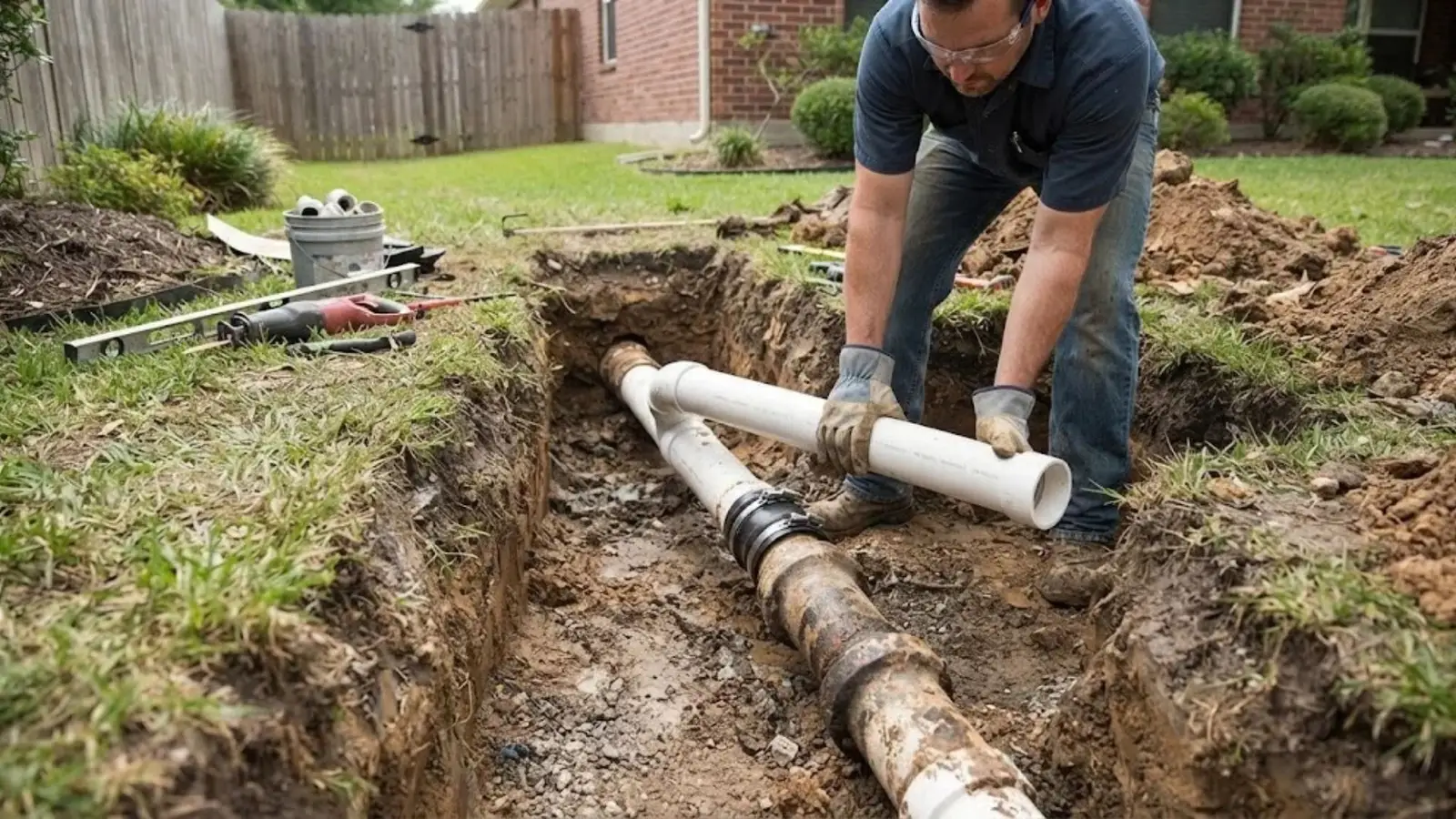
Emergency Sewer Line Repair in Star, ID
A broken sewer line can push wastewater back into your home or leak it into the ground under your yard, and either one cannot wait for business hours. Our sewer line repair dispatch in Star is open 24/7, so call (208) 679-8357 and a plumber will tell you what to shut off while we line up a visit.
Stop running water in the house, keep everyone away from any sewage on the floor, and leave the toilets alone. Once we have a camera view of the line, you get a clear price for the repair before any digging or lining starts.
- Open 24/7
- Camera view before any repair
- Clear price before work starts
- Open 24/7 for emergencies
- Licensed and insured
- Clear price before work starts
- Call to book, no forms
When a sewer problem cannot wait until morning
A slow drain can sit for a day. A sewer line that has failed usually cannot. If the lowest tub or floor drain is bringing up wastewater, or several toilets gurgle and back up together, the main line is blocked or broken and every flush adds to the mess.
While you wait for a plumber
- Stop using water in the whole house, including the washer and dishwasher.
- Keep children and pets out of any room with sewage on the floor.
- Do not pour chemical drain openers into the line. They sit in the pipe and make the repair harder on the plumber.
- Photograph the backup and note which drains are affected.
- Find your cleanout if you can, but do not open it unless the dispatcher says to.
Not every backup means a broken pipe. Many are plain blockages that a cable or hydro jetting will clear, and our sewer line cleaning page covers that path. Repair is the answer when the pipe itself is damaged. If you only want to see inside the pipe, a sewer camera inspection shows it without committing you to a repair.
What you see, what it usually means, what fixes it
| Symptom | Likely cause | Repair path |
|---|---|---|
| Lowest drain backs up, then clears, then returns | Roots entering a joint, or a low spot holding waste | Clear, camera, then spot repair or lining if the pipe is sound |
| Gurgling toilets and slow tubs together | Blockage or restriction in the main line | Cable or jetting first, repair only if the camera shows damage |
| Wet or soft patch in the yard, no backup | Cracked or separated pipe leaking out | Locate the break, then spot repair or replacement |
| Sewer smell outdoors near the line | Open joint, broken pipe, or failed cleanout | Camera and locate, then repair the failed section |
| Repeated clogs after each cleaning | Offset joint, belly, or scale on old pipe | Camera, then repair, lining, or replacement of the bad run |
Spot repair or replace the whole line
This is the decision most homeowners want help with, and the camera answers most of it. If the pipe is sound everywhere except one cracked joint or one short crushed section, a spot repair is the sensible fix. You pay for one section, not the entire run.
If the camera shows damage in several places, or material flaking apart, patching one spot just moves the failure down the line. Then we price a full replacement next to the spot repair so you can compare.
Call the 24/7 line. We repair sewer lines across Star, Middleton, and Eagle and can talk you through the first steps.
A localized crack with root intrusion
A common situation: the camera shows one cracked spot, with fine roots threaded through it, and the rest of the line looks fine. The homeowner reasonably asks whether that can be fixed in one place rather than redoing the line.
Often it can. We cut the roots out first, because no repair bonds well to a pipe full of root mass. Then we repair that one section by digging down to it, or by setting a short liner patch across the crack if the pipe is clear and continuous enough to take it.
Open trench, pipe lining, or pipe bursting
Open trench
We dig down to the pipe, remove the bad section, and install new pipe at the correct slope. It is the most direct method and the only one that fixes a bellied or collapsed run for certain. The cost is a trench through your yard, driveway, or landscaping, and restoration afterward.
Pipe lining (cured-in-place)
A resin-soaked liner is pulled into the old pipe and cured to form a new pipe inside it. It avoids a long trench and works well for cracks, open joints, and light root damage. The catch is that the old pipe must be clear and continuous. A collapsed section, a major offset, or a belly full of standing water will not line properly, so lining is not an option for every failure.
Pipe bursting
A bursting head pulls new pipe through the path of the old one while breaking the old pipe outward. It replaces the line without a full trench, and it can handle some bellies and offsets that lining cannot. It still needs access pits at both ends, and it can disturb nearby utilities, so locating those first matters.
Bellied and offset pipe
A belly is a low spot where the pipe has settled and holds waste. An offset is a joint where two pipe ends have slipped out of line. Both catch paper and solids, so the line backs up soon after any cleaning. A deep belly or an offset that snags our cable is worth correcting, usually by digging that section and restoring the slope, because lining follows the old shape and does not fix it.
Cast iron and older pipe
Older homes may have cast iron or other aging pipe in the drain and sewer lines. Cast iron corrodes from the inside, building rough scale that narrows the bore and catches waste. Over time it can thin, crack, or break at joints.
On camera, scaled cast iron looks like rough, flaking walls with rust nodules. Light scale can be cleaned and watched. Heavy scale, cracks, or pipe that crumbles under the cable usually means replacing that section.
Replacing a sewer lateral
The lateral is the pipe that carries waste from your house to the connection with the public main. Replacement makes sense when the camera finds damage along most of its length or roots keep returning through multiple joints. You get the price for the whole job before anyone breaks ground.
Idaho law requires a call to Digline at 811 (1-800-342-1585) at least 2 business days and no more than 10 business days before digging, with the dig area marked in white paint. That means the utility lines in your yard get marked first, which protects you from striking a gas, water, or electric line. Plan on that wait when the repair is not an emergency.
Source type: Digline, Idaho 811
Permits and inspections also apply. The Idaho Division of Occupational and Professional Licenses (DOPL) says a permit is required when plumbing work is performed, and required inspections include ground work, rough-in, and final. Homeowners may buy a permit only for plumbing on their own residence, and a local city permit may not replace the DOPL permit. Ask your plumber who is pulling the permit, and check any plumber's license through DOPL at (208) 334-3233.
Whose pipe is it: yours or the public main
In Star, sewer service comes through the Star Sewer and Water District. If the camera shows the blockage or break is out in the public main, call the district, and we will tell you plainly so you do not pay for the wrong repair. For exactly where your responsibility ends, ask the district.
Homes in Middleton and Eagle should call their city or sewer provider for the public main. Our Middleton and Eagle pages list what we cover in each area.
If your home is on septic, tell the dispatcher
Some properties outside the district's service area use a septic system instead of a public sewer. If yours does, say so on the first call, because the work differs. We can often inspect and repair the piping from the house to the tank.
We do not handle septic tank pumping unless it is confirmed on the call. Sewer repairs are governed by the 2015 Uniform Plumbing Code (UPC) that Idaho adopts as its State Plumbing Code, which is why the permit and inspections matter on a trench or lining job.
What drives the cost of a sewer repair
- Length of damaged pipeA single spot repair costs far less than replacing a long lateral.
- Depth and accessA deep line, or one under a driveway or slab, takes more time and equipment to reach.
- MethodOpen trench, lining, and pipe bursting each carry different equipment and restoration costs.
- Surface restorationConcrete, pavers, and landscaping over the line add to the job and may be priced separately.
- Permits and utility markingPermit purchase, inspection timing, and the Digline marking wait all affect the schedule.
Homeowner policies often exclude sewer line wear and root damage but may cover resulting water damage from a sudden backup, so ask your insurer before you decide. For your real number, call (208) 679-8357.
Sewer line repair questions from Star homeowners
Yes. Our dispatch line is open 24 hours a day, including weekends and holidays. If sewage is backing up, call (208) 679-8357 and we will send a plumber when the schedule allows, with a clear price before work begins.
Sometimes. Lining and pipe bursting reduce digging, but lining needs a clear, continuous pipe and bursting needs access pits at each end. The camera decides which method fits.
We check at the cleanout and with the camera. If the blockage or break sits in the public main, call the Star Sewer and Water District. For Middleton and Eagle homes, call your city or sewer provider.
DOPL says a permit is required when plumbing work is performed. A city permit may not replace it, so ask who is pulling it.
Tell the dispatcher on the first call. Pipe repairs between the house and tank may be work we can do, but we do not handle septic tank pumping unless confirmed on the call.
Think your sewer line has failed?
Call (208) 679-8357. We will find out whether it is a clog, a damaged section, or the public main before anyone digs.
☎ Call (208) 679-8357