
Emergency Leak Detection in Star, ID
Leak detection in Star, ID starts with a simple fact: water is going somewhere it should not, and you may not be able to see where. A meter that keeps turning, a bill that jumped, a warm patch on the floor, or a stain spreading on a ceiling all mean the same thing. Our line at (208) 679-8357 is open 24/7, and a plumber will help you decide what to shut off while you wait.
If water is actively pouring, close the main shutoff first. If it is slow and hidden, run the meter test below, then call. We find the leak before anyone cuts into a wall, slab, or yard.
- Find first, open walls second
- 24/7 dispatch line
- Clear price before work starts
- Open 24/7 for emergencies
- Licensed and insured
- Clear price before work starts
- Call to book, no forms
Suspect a leak? What to do first
Most people who call about a leak do not know where it is. They only know something is wrong: water sounds when nothing is running, a musty smell, peeling paint, or a bill that does not match how much water the household used. That is a normal place to start, and it is what a diagnostic visit is for.
Before the plumber arrives
- Find your main shutoff and learn which way it turns. Close it if water is visibly flowing.
- Turn off the power to any room where water has reached outlets, switches, or light fixtures.
- Move furniture, rugs, and electronics away from the wet area.
- Take dated photos of stains and the meter reading for your insurer.
- Do not cut into a wall or floor to look. You can lose the clue that shows where the water starts.
Why finding the leak comes before fixing it
Water follows pipes, framing, and slab edges before it shows itself. A ceiling stain can sit several feet from the actual break, so a repair made where the water appears often misses the source. We locate first, then tell you the plan and the price.
If water is actively spraying, burst pipe repair takes over, and a leaking drain line may lead to sewer line repair. We serve Star, Middleton, and Eagle the same way.
The tools we use to pinpoint water without demolition
No single tool finds every leak, so our plumbers combine several based on the pipe and where it runs.
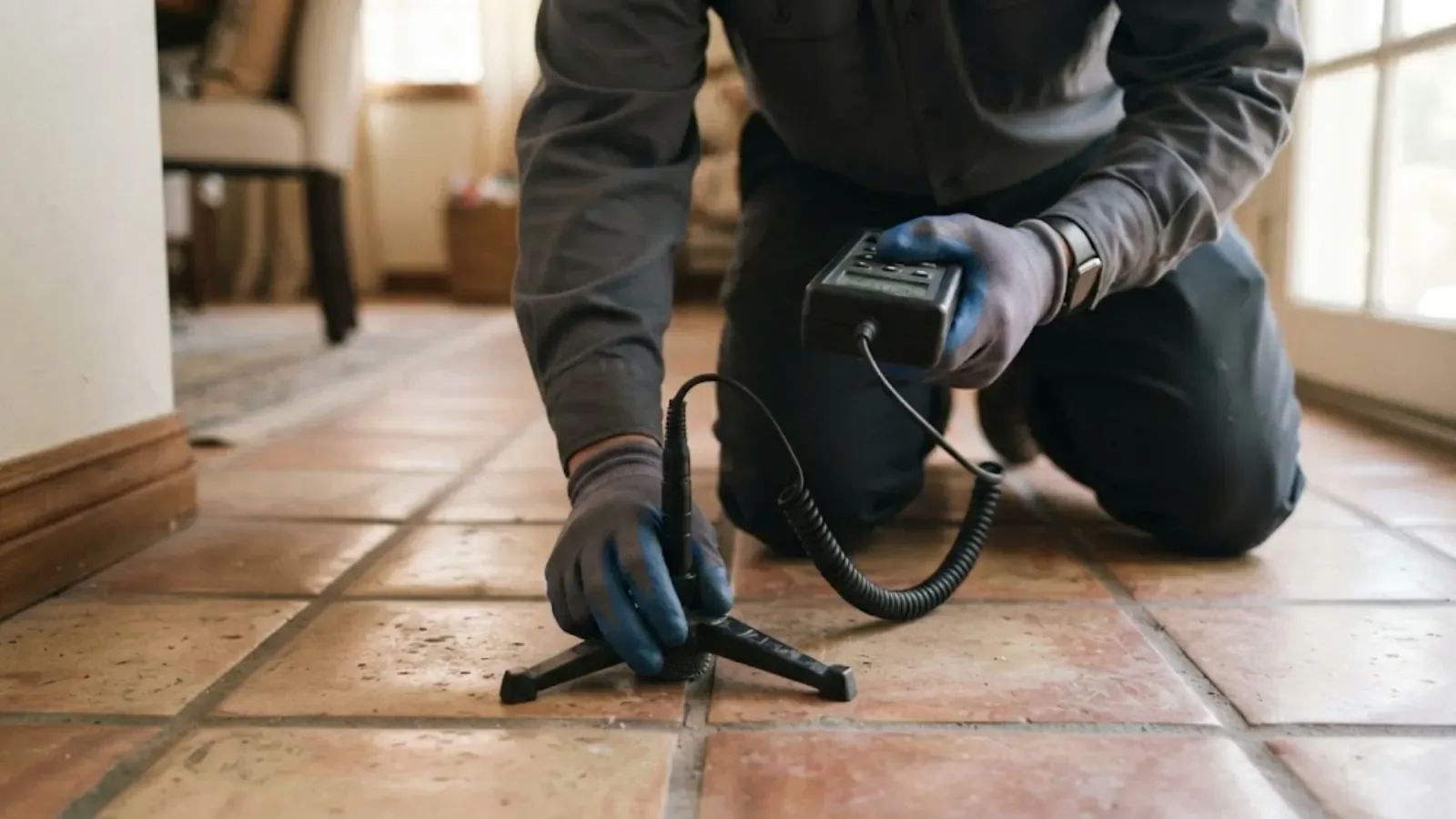
Acoustic listening
Sensitive microphones and ground sensors hear water escaping under pressure. Good for slabs and buried lines.
Electronic leak locators
These instruments filter background noise so we can tell a pipe leak from traffic or a fixture running elsewhere.
Thermal imaging
A hot line leaking under a floor or behind drywall often shows as a warm streak on camera.
Moisture meters
Meters map how far moisture has spread through drywall, wood, and subfloor, so we can trace it back.
Pressure testing
We isolate a section, bring it to test pressure, and watch the gauge. A drop means that section leaks.
Tracer gas
For stubborn leaks, a harmless gas is fed into the line and a sensor follows it to the escape point.
| Situation | Methods we reach for first | Why |
|---|---|---|
| Meter moves with everything off | Meter test, then pressure test and acoustic listening | Confirms a leak exists, then separates the house side from the buried side |
| Warm spot on the floor | Thermal imaging and acoustic listening | Points to a hot line under the slab |
| Ceiling or wall stain | Moisture meter and thermal imaging | Maps the wet area and traces it back to the source |
| Damp crawlspace or soft subfloor | Visual inspection, moisture meter, pressure test | Open access lets us look directly at pipes and joints |
| Wet yard or meter box | Acoustic ground sensors and pressure test | Locates a buried line without trenching the whole yard |
Call the 24/7 line. We locate leaks across Star, Middleton, and Eagle and explain what we find before any repair starts.
Water meter running or a high water bill: how to check
A bill that climbs with no change in how you live is a common reason people call. The first check costs nothing and takes minutes.
Turn everything off
Close every faucet, idle the dishwasher and washer, and keep irrigation off.
Open the meter box
Find the meter near the street or property edge. Lift the lid carefully and watch for insects.
Read the leak indicator
Most meters have a small triangle or dial that spins with any flow. A moving indicator with the house idle means water is going somewhere.
Note the reading and wait
Write down the numbers, wait 30 minutes without using water, and read again. A change confirms a leak.
A moving meter does not say where the leak is. Close your main shutoff. If the meter stops, the leak is inside the house, and it could be as small as a toilet silently refilling. If it keeps moving, the leak is on the line before the shutoff, which our water service line repair page covers.
For questions about readings or billing, ask the Star Sewer and Water District, which provides water service to the city and surrounding areas.
Slab leaks: warm floors, running water sounds, and hot water bills
A slab leak is a break in a pipe under or inside a concrete foundation. You rarely see water. You notice a warm spot on a tile or wood floor, the sound of running water with every fixture off, a hot water bill that keeps rising, or a water heater that never seems to rest.
A hot line leaking under concrete warms the slab above it. If one patch of floor feels warmer than the rest, tell the dispatcher.
How we confirm and locate a slab leak
We listen along the floor with acoustic equipment, scan warm areas with a thermal camera, and pressure test the hot and cold lines separately. That usually lets us mark a small area on the floor.
What repair options look like
- Spot repair: we open the slab at the mark and splice in new pipe.
- Reroute: we abandon the run under the slab and pipe through walls or the attic.
- Repipe: if the pipe is corroding throughout, replacing the system beats chasing leaks. See whole house repiping.
Leaks in walls and ceilings
A brown ring on a ceiling, bubbling paint, or a soft drywall seam suggests water behind a surface. The stain is where water ends up, not where it starts. The source can be a supply line, drain joint, shower valve, or tub overflow some distance away. If a ceiling is bulging, set a bucket under it and call.
We map the wet area with a moisture meter and thermal camera, then trace to the fitting. A roof leak or AC condensate line can leave the same stain, and we say so if the evidence points away from pipes.
Under-house and crawlspace leaks
A crawlspace gives us direct access to supply and drain lines. Signs of a leak include a soft floor, warped hardwood, a musty odor through the vents, and damp ground.
We see joints and valves directly and pressure test one branch at a time. Repairs here are usually quicker than in finished walls. Do not enter a wet crawlspace with the power on.
Buried leaks: yard, driveway, and meter-box problems
A buried leak shows up as a soggy lawn patch, a green stripe in dry grass, water pooling in the meter box, or low pressure at every tap. The wet spot can sit some distance from the break.
We use ground sensors and acoustic listening, then confirm with a pressure test. A leak between the meter and the house is a job for water line repair. Meter-box equipment on the utility side belongs to your water provider, so ask the Star Sewer and Water District before touching it.
Call 811 before any digging
Idaho law requires calling 811 (Digline, 1-800-342-1585) at least 2 business days and no more than 10 business days before digging, with the dig area marked in white paint. That applies to a homeowner with a shovel too.
Sprinkler lines, irrigation valves, and pool or hot tub plumbing
Irrigation systems leak at valve boxes, risers, and glued joints. Clues are a wet area that never dries, a weak zone, or a meter that moves while the controller is off. We pressure test a zone and trace the line.
We also locate leaks in plumbing that feeds a hot tub or pool equipment, but we do not repair pool shells.
What affects the price of leak detection
We give you a clear price before work starts and separate finding the leak from repairing it. These factors move the number. Once the leak is found, the repair is plumbing work under the 2015 Uniform Plumbing Code (UPC) that Idaho adopts as its State Plumbing Code, and we will tell you what permit it calls for before work starts.
- Where the pipe isA pipe in an open crawlspace is quicker to test than one in a slab or finished wall.
- How many methods it takesOne listening pass takes less time than thermal imaging, a pressure test, and tracer gas together.
- Size of the areaOne bathroom wall is smaller than a floor of wet drywall or a long buried run.
- Access and patchingOpening a slab or wall adds repair and restoration work, priced separately.
- After-hours timingA night or weekend call can be priced differently, and we say so up front.
Homeowner policies often cover sudden water damage but may exclude a long-running leak or damage from wear. Ask your insurer first and keep your photos and meter readings. For your real number, call (208) 679-8357.
Leak detection questions from Star homeowners
Yes. Our dispatch line is open 24 hours a day, every day. If water is flowing or a ceiling is bulging, call right away and the dispatcher will tell you what to shut off. We offer same-day appointments when available and give you a price before work starts.
Common signs are a warm floor spot, running-water sounds with everything off, a rising hot water bill, and a moving meter. A plumber confirms it with listening equipment, a thermal camera, and a pressure test.
Usually not to find it. Acoustic tools, thermal imaging, and moisture meters narrow the location first, and we open the smallest area that works for the repair.
Run the meter test, then close your main shutoff and check again. If the meter stops, the leak is inside the house. If it keeps moving, the leak is between the meter and the shutoff, which means the buried line. Either way, call us with what you saw.
Ask your water provider first. The Star Sewer and Water District provides water service to the city and surrounding areas and can tell you which parts of the meter assembly belong to it. We handle leaks on the house side.
Leak you cannot see, in Star tonight?
Call now. We will walk you through the shutoff and the meter test, then line up a visit.
☎ Call (208) 679-8357