
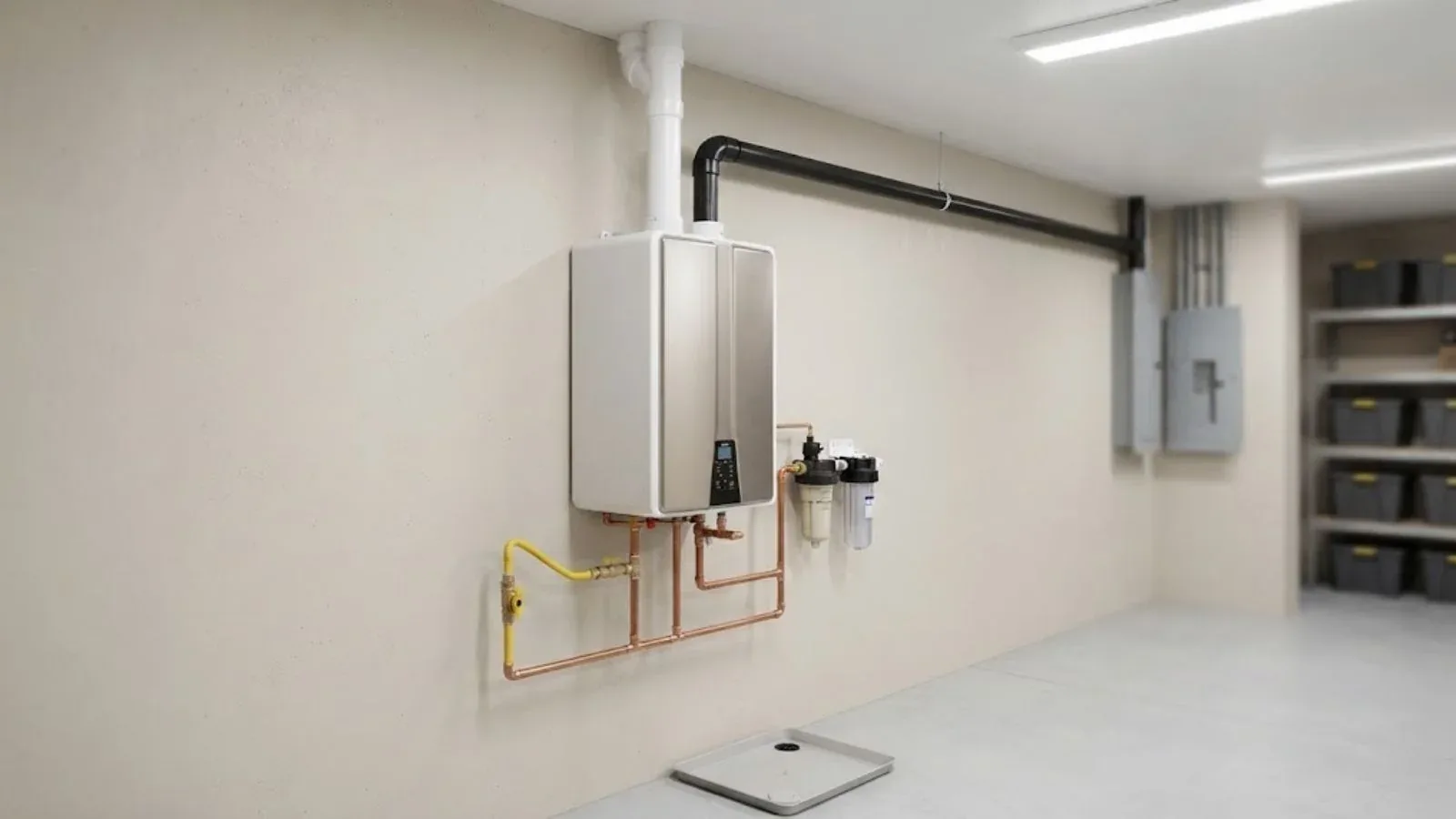
How to Size a Tankless Water Heater in Star for Your House
A tankless water heater is sized by two numbers: how many gallons per minute you need at the busiest moment, and how many degrees the water must rise from the incoming cold temperature to your set temperature. Add up the fixtures that could run at once, find your cold water temperature in the coldest month, and match both to the unit's rated output. A tank is sized by storage. A tankless unit is sized by flow.
That is the whole method, and the sections below show how to do it. The step most people miss is the gas line and vent, since a larger unit can overload an undersized gas pipe. Our tankless water heater team can check all of it. Call (208) 679-8357.
- Open 24/7 for emergencies
- Licensed and insured
- Clear price before work starts
- Call to book, no forms
The two numbers that decide the size
Flow rate is measured in gallons per minute, or GPM. Temperature rise is the difference between the cold water coming into the house and the hot water you want at the tap. A unit that makes plenty of hot water in summer may struggle in winter, because colder incoming water means a bigger rise.
Measure your cold water with a thermometer under a running cold tap in the coldest part of the year. Do not guess it. The number matters, and we have no verified figure for Star to give you.
A simple sizing worksheet
List what runs at the same time
Think of your busiest morning. Which showers, sinks, and appliances run together?
Add their flow rates
Use the table below, or read the numbers stamped on your fixtures and appliances.
Find the temperature rise
Subtract your winter cold water temperature from the temperature you want at the tap.
Match a unit's rated output
The maker's chart shows the GPM a unit delivers at a given rise. Pick one that covers your total with a little room.
| Fixture | Typical flow | Notes |
|---|---|---|
| Shower | About 2 GPM | Rain heads and body sprays can use more |
| Kitchen faucet | About 1.5 GPM | Often runs along with the dishwasher |
| Bathroom sink | About 1 GPM | Low demand |
| Dishwasher | About 1.5 GPM | Draws hot water in bursts |
| Clothes washer | About 2 GPM | Only when set to a hot wash |
Two showers and a running dishwasher add up to about 5.5 GPM. If your winter rise is large, a single unit may not meet that, and some homes add a second unit or a small tank.
Gas or electric changes what size is possible
Gas tankless units reach higher flow rates at a large rise, but they need a gas line big enough to feed them and a vent built for the exhaust. Electric units need heavy wiring and a lot of panel capacity, and whole-house units may not fit a small panel.
Gas units
Check the gas meter and pipe size, the vent route, and clearances. A bigger burner may need a larger gas line than your old tank used.
Electric units
Check the panel capacity and available breaker space. An electrician may need to upgrade wiring before the unit can run.
Gas smell? Leave first
If you ever smell gas, leave the building and call the gas utility or 911 before you call a plumber.
Call (208) 679-8357. Our line is open 24/7 and same-day appointments are available when the schedule allows.
Local checks before you buy in Star
The Idaho Division of Occupational and Professional Licenses says a permit is required when any plumbing, electrical, or HVAC work is performed, and its required inspections are ground work, rough-in, and final. City of Star lists plumbing and mechanical permits on its city services page, and Star City Hall is at 10769 W State Street, (208) 286-7247.
Tankless installs often touch gas, venting, and water at once, so more than one permit may apply. Call before you buy the unit, and ask whether the vent and gas line changes are inspected. Skipping it can cost you at resale.
Source type: Idaho DOPL and City of Star website
Neighbors in Middleton and Eagle should ask their own city building department, because each city runs its own permit desk. Water quality is also worth a look. We have not verified water hardness for Star, so test your tap and ask your water provider, since scale can shorten the life of a tankless heat exchanger.
Sizing mistakes we see
- Choosing by tank gallons instead of flow rate.
- Using summer water temperature to calculate the rise.
- Forgetting the dishwasher or washer when counting fixtures.
- Skipping the gas line check and ending up with a unit that starves.
- Buying a bigger unit than needed, which adds cost and gas demand with no daily benefit.
Undersizing gives you lukewarm showers when two fixtures run. Oversizing wastes money upfront. If you are still deciding between a tank and tankless, our water heater replacement page covers the like-for-like option, and we can compare both for your house. Gas supply and venting for a tankless unit are code items under the 2015 Uniform Plumbing Code (UPC) that Idaho adopts as its State Plumbing Code, so include them when you compare quotes.
Tankless sizing questions from Star homeowners
It depends on how many fixtures run at once and your winter temperature rise, not on family size alone. Add up your peak flow and match it to a unit's rated output at your rise.
It can, if the unit's GPM at your temperature rise covers both. In winter the same unit may fall short. That is why the cold water temperature matters.
Often, yes. Tankless burners draw more gas at once than a tank burner. A plumber checks the pipe size and meter capacity before choosing a unit.
Many makers recommend periodic flushing to clear scale. Follow your unit's manual, and ask your plumber about a schedule.
We cannot tell from an address. Gas service depends on the street and the utility, and we have not verified it for any Star subdivision. Check your latest gas bill, or call the gas utility, before you plan a gas unit.
Ready to check your sizing?
Call (208) 679-8357. We will walk through flow, temperature rise, and gas supply before anything is priced.
☎ Call (208) 679-8357