
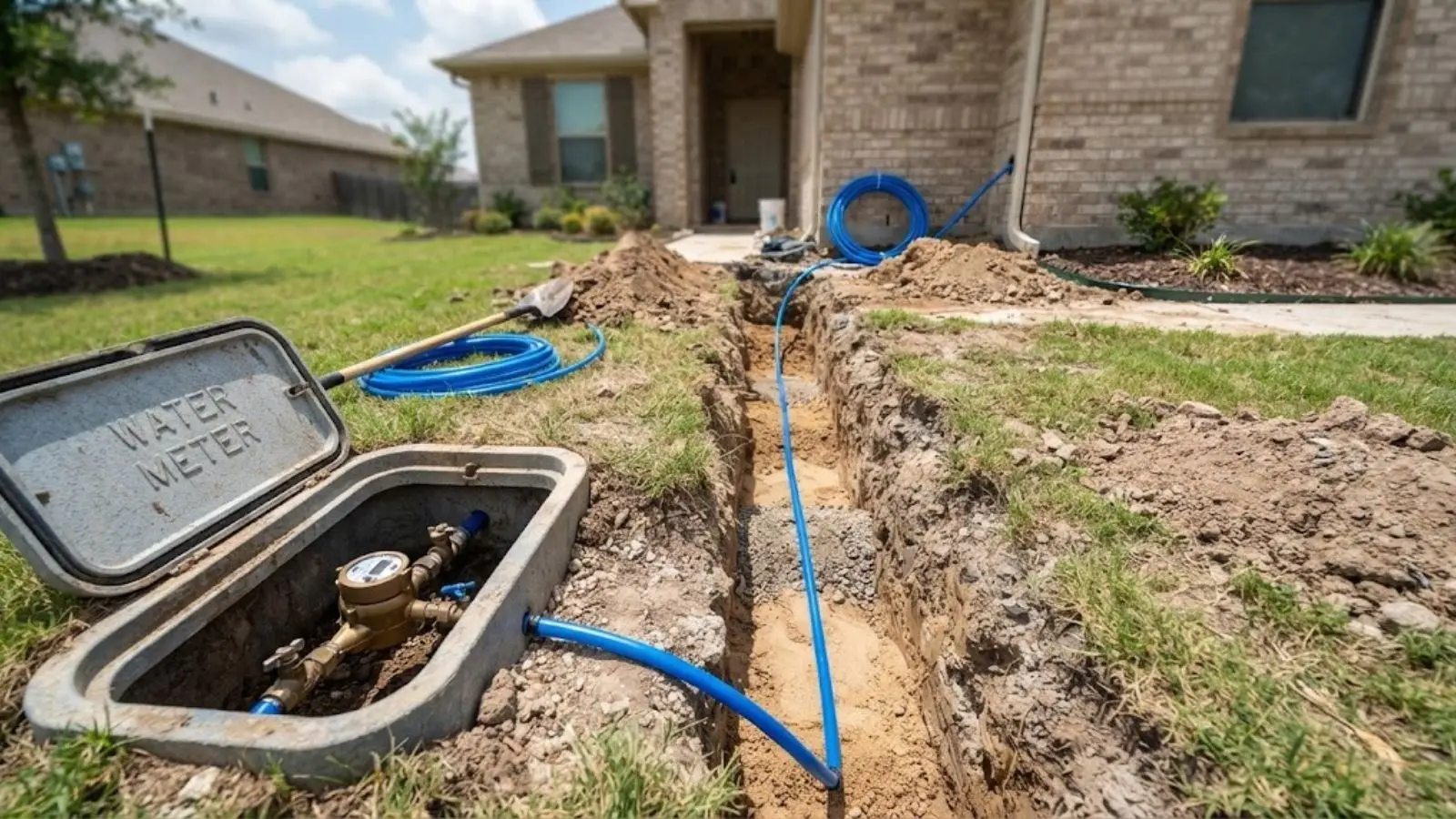
How to Find an Underground Water Leak in Star, ID
To find an underground water leak, shut off every tap and appliance, then watch your water meter. If the dial or the low-flow indicator keeps moving, water is escaping somewhere between the meter and the fixtures, and the buried service line is a prime suspect. Walk the yard for soggy ground, a patch of unusually green grass, or a sunken spot to narrow it down.
This guide walks through the meter test, the clues in the yard and house, and the point where a plumber with leak-locating equipment saves you from digging blind. Our dispatch line is open 24/7 at (208) 679-8357 if the water is already surfacing.
- Open 24/7
- Pinpoint before digging
- Clear price before work
- Open 24/7 for emergencies
- Licensed and insured
- Clear price before work starts
- Call to book, no forms
Clues that the leak is underground
A buried leak rarely announces itself with a puddle. Water often soaks away into the soil and shows up through side effects. Pay attention to what has changed, not just what is wet.
- A water bill that keeps climbing with no change in how many people live in the house
- Lower water pressure at every faucet, not one fixture
- The sound of water running or hissing when everything is off
- A soggy patch or a strip of lawn greener than the rest, with no sprinkler nearby
- A sinkhole, a dip in the driveway, or cracked pavement along the path of the line
- A warm spot on a slab floor, which can point to a leaking hot line under it
A sprinkler system can fool you, because a broken head or buried irrigation line leaks outside too. Shut the irrigation zones off and retest before blaming the house line.
The meter test that tells you if you have a leak
Stop all water use
Turn off taps, the ice maker, the washer, and the dishwasher. Make sure nobody flushes a toilet during the test.
Read the meter
Open the meter lid and note the dial or the small leak indicator. Take a photo so you can compare.
Wait 15 to 30 minutes
Do not use water. Come back and look at the meter again.
Compare
If the reading moved or the indicator is spinning, something is leaking. Close the main valve at the house and check again.
That last check splits the problem in two. If the meter stops once the house main is closed, the leak is inside the house. If the meter keeps moving with the house valve off, the leak is on the buried line between the meter and the house. A toilet that runs on silently is the most common false alarm, so check those first.
What the yard is telling you
| What you see | Likely meaning | Next step |
|---|---|---|
| Wet or spongy ground in a line from the meter to the house | Leak on the service line | Shut off the main and call a plumber |
| Green, lush patch in a dry stretch | Slow leak feeding the roots | Run the meter test and mark the spot |
| Water pooling at the curb or meter box | Leak at the meter connection or the line just past it | Close the main and call. Ask the district about the meter side |
| Wet basement wall or damp slab edge | Leak near the foundation | Mark the area and call |
| Wet only after sprinklers run | Irrigation line or head | Test with zones off |
Water follows the path of least resistance, so the wet spot may sit well away from the break. Gravel bedding and slope can send it several feet along the pipe trench before it surfaces. This is why a patch of wet grass is a clue and not an X marking the dig.
Shut the main valve and call (208) 679-8357. We answer 24/7 and can send a plumber with locating equipment.
Which side of the meter is yours
Star Sewer and Water District provides sewer and water service for the City of Star and surrounding developed areas in Ada County. We have not verified where the district's responsibility ends and the homeowner's begins at each address.
For you, that means asking before you pay for repairs. Call the district at its Tempe Lane office, or whichever utility is on your bill, and ask who owns the pipe at the meter. Then you will know whether a leak at the curb is theirs or yours.
Source type: Star Sewer and Water District public information
Homeowners in Middleton and Eagle should check their bills for their provider, since utilities differ by address. Our pages for Middleton and Eagle cover how we work in those towns.
Do not dig until you know two things
Call 811 first
Idaho law requires you to call 811 (Digline, 1-800-342-1585) at least 2 business days and no more than 10 business days before you dig, with the dig area marked in white paint. Buried gas, electric, and communication lines can sit near a water line, and hitting one is dangerous.
A shovel in a guessed spot also risks a second break. That is the practical payoff of a locate: you open the ground once, in the right place.
Once the 811 marking is done, a plumber can use listening equipment, tracer gas, or pressure testing to narrow the break down. We cover those methods on our leak detection page. If the leak is confirmed on the buried supply, water service line repair is the job that follows.
What you can do yourself and when to stop
Reasonable for a homeowner
- Run the meter test and write down the readings and the time
- Close the main shutoff and see if the meter stops
- Check toilets with a drop of food coloring in the tank
- Shut off the irrigation system and retest
- Take photos of wet areas and mark them with flags
Stop at digging, cutting into walls, or opening a slab. Those are the steps where cost and risk jump. If the main is off and water is still coming out of the ground, or the ground is sinking, call right away. A leak near a foundation can undermine soil, and a flooded crawlspace is not something to wait on.
Repairing a buried supply line is plumbing work under the 2015 Uniform Plumbing Code (UPC) that Idaho adopts as its State Plumbing Code, and the excavation itself needs a Digline 811 call first.
What affects the price of finding and fixing it
- How deep and how long the line isA short run near the surface is simpler than a long, deep one.
- What is on topLawn is easier to restore than a driveway, a patio, or a concrete slab.
- Locating methodListening gear may be enough. Some leaks need a pressure test or gas.
- Repair or replaceA single clamp or repair section costs less than replacing a worn line.
- Permit and inspectionPlumbing work in Idaho needs a permit, and a final inspection is required.
Insurance often covers the resulting damage but not always the line itself, so ask your insurer before you decide. For your real number, call (208) 679-8357.
Buried leak questions from Star homeowners
It depends on the size of the leak and the soil around it. A slow leak can run for months and show up only on your bill. A large one can wash out soil under a driveway or slab in days. Do not wait if the meter keeps moving.
You can mark suspect areas, but a probe in the dark is a poor way to find a pipe, and it does not replace an 811 locate. Pinpointing the break accurately usually needs listening gear and some experience.
Close the main valve at the house and read the meter. If it stops, the leak is inside. If it keeps moving, the leak is on the buried line between the meter and the house.
Yes, if water is surfacing or your bill is spiking. Close the main at the house and call us. Our dispatch line is open 24/7, and you do not need to wait for business hours.
Not necessarily. Each address has its own line. Run your own meter test. If the leak is at the meter, ask the Star Sewer and Water District or your own provider who owns that connection.
Think you have a buried leak?
Call us with your meter test result. A plumber can pinpoint the leak before anyone starts digging.
☎ Call (208) 679-8357